By Elena Rostova · Published
\### Key Takeaways
- Unprecedented Creative Velocity: Transitioning from traditional agency retainers to AI video contests allowed the brand to generate 50+ high-quality ad variations in just one week.
- Massive Cost Efficiency: By rapidly testing diverse, AI-generated UGC concepts, the brand achieved a 40% reduction in Customer Acquisition Cost (CAC).
- Streamlined Operations: Anthum’s Campaign Management OS empowered the brand to source, judge, and license winning assets in a single, frictionless workflow.
- Defeating Ad Fatigue: Continuous injection of fresh, creator-driven AI videos proved to be the ultimate antidote to paid social creative burnout.
For "Lumina" (anonymized to protect their competitive advantage), a rapidly growing DTC wellness brand, this fatigue had become a crisis. Their Customer Acquisition Cost (CAC) was spiraling out of control, and their traditional creative agency couldn't produce fresh user-generated content (UGC) fast enough to feed the algorithm's insatiable appetite. They needed to effectively scale UGC video. They needed a radical shift in their creative supply chain. They needed to figure out how to scale UGC video without scaling their headcount or blowing up their budget.
This is the story of how Lumina abandoned the slow, expensive traditional retainer model, turned to Anthum's AI video contest platform to scale UGC video, and slashed their CAC by 40% in less than a month.
Why Do Traditional Video Agencies Fail to Keep Up with Paid Social Fatigue?

Traditional video agencies fail to keep up with paid social fatigue because they operate on weeks-long production timelines, which is fundamentally incompatible with the 3-to-5-day half-life of modern TikTok and Meta ads.
When Lumina first scaled to $5M ARR, they relied heavily on a boutique creative agency. The process looked like this: a two-week brief phase, a week of creator sourcing, a week of filming, and two weeks of editing. By the time the brand received four new video ads, their existing campaigns were already burning out.
According to a 2023 Meta Performance Marketing Study, ad creative drives 56% of a campaign's sales lift, yet brands often spend 80% of their time optimizing media buying instead of testing new creative hooks. Lumina was paying a $15,000 monthly retainer for a handful of assets that were dead on arrival.
"The bottleneck in modern performance marketing isn't media buying; it's creative velocity," explains Savannah Sanchez, a veteran paid social media buyer. "If you can't test 10 to 15 new hooks a week, you're already behind your competitors."
Lumina realized that throwing more money at a traditional agency wouldn't solve the speed issue. They needed a decentralized, high-volume approach to creative production to effectively scale UGC video.
How Did This DTC Brand Scale UGC Video So Quickly?
Lumina was able to scale UGC video rapidly by launching a centralized creative brief on Anthum’s AI video contest platform, inviting hundreds of specialized AI creators to submit ad variations simultaneously.
Instead of hiring one agency to produce four videos, Lumina launched a $3,000 prize pool contest on Anthum. The brief was simple: Create a 15-to-30-second UGC-style video highlighting our new sleep supplement, focusing on the 'morning after' feeling.
Because Anthum's creator marketplace is populated by AI-native video editors and directors, the creators didn't need to wait for physical product shipping. They utilized AI avatars, AI voiceovers, and AI-generated lifestyle b-roll to construct incredibly realistic, high-converting UGC ads in a matter of hours. This is the core mechanic of how AI video contests are unleashing unprecedented brand-creator synergy.
What Were the Immediate Before and After Metrics?
The immediate impact of switching to an AI video contest model was a staggering increase in creative volume and a sharp decrease in acquisition costs.
Here are the hard numbers from Lumina's first 30 days on Anthum:
- Creative Volume (Before): 4 new video ads per month.
- Creative Volume (After): 52 new video ad submissions in 7 days.
- Cost Per Asset (Before): $3,750 per video (based on retainer).
- Cost Per Asset (After): $57 per video (based on prize pool distribution to winners).
- Customer Acquisition Cost (Before): $45.00.
- Customer Acquisition Cost (After): $27.00 (a 40% reduction).
What Makes AI Video Contests Better Than Single-Tool Generators?
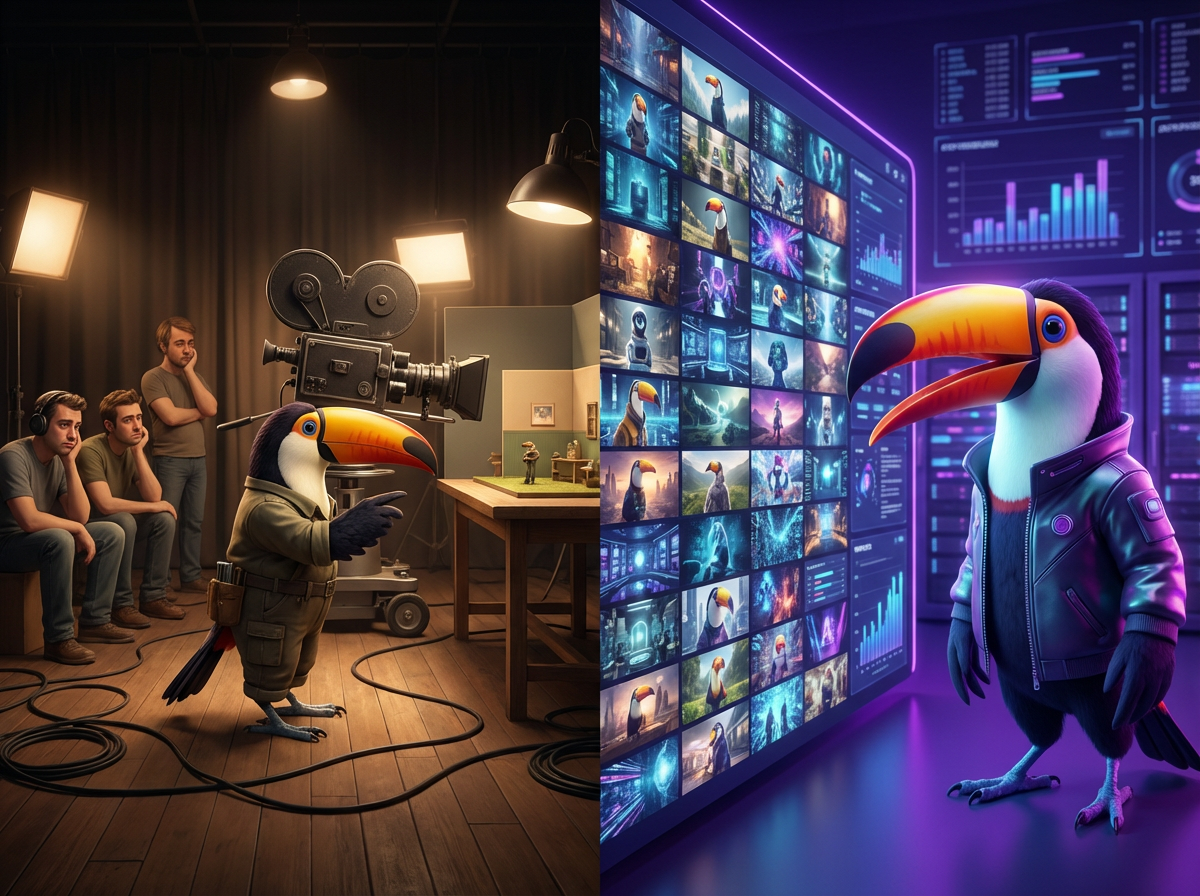
AI video contests are superior to single-tool generators because they harness diverse human creativity and strategic direction, delivering fully edited, ready-to-run ads rather than disjointed, raw AI clips.
When brands try to scale UGC video in-house, they often turn to standalone AI video generators. While these tools are powerful, they require a human operator with a deep understanding of pacing, hook structure, and ad psychology to turn raw generations into winning ads.
As we noted in our breakdown of the ultimate showdown for dominating AI UGC platforms, simply having access to an AI tool doesn't make you a great marketer.
By using Anthum, Lumina didn't just get access to AI technology; they gained access to a marketplace of skilled creators who know how to prompt, edit, and optimize AI video specifically for performance marketing. The creators competed to deliver the highest-converting concepts, ensuring that Lumina received a wide variety of creative angles—from "TikTok organic" styles to high-production "explainer" aesthetics—all without the brand having to prompt a single AI model themselves.
How Does the Anthum Campaign Management OS Streamline Creative Sourcing?
The Anthum Campaign Management OS streamlines creative sourcing by centralizing the entire lifecycle—from brief creation and creator submissions to structured judging and licensing—into one unified dashboard.
One of the biggest hurdles Lumina faced with their previous agency was the administrative nightmare. Endless email chains, scattered Google Drive links, confusing feedback loops, and messy licensing agreements ate up hours of the marketing director's week.
When they launched their contest on Anthum, the operational friction disappeared. The platform's Campaign Management suite provided a seamless experience:
1. Brand Kits: Lumina uploaded their hex codes, logos, and product shots once. Every creator had instant access to the approved assets. 2. Structured Judging Pipelines: As the 50+ submissions rolled in, Lumina's team could swipe through them in a TikTok-style interface, rating them from 1 to 5 stars, making collaboration across the marketing team effortless. 3. Automated Licensing and Payouts: When Lumina selected the winning videos, Anthum automatically transferred the commercial usage rights to the brand and instantly routed the prize money to the creators. No invoices, no tax forms, no legal back-and-forth.
According to a 2024 report by Gartner, marketing teams waste up to 30% of their workweek on non-creative administrative tasks. Anthum's end-to-end OS gave Lumina's team their time back, allowing them to focus on strategy rather than file management.
How Can Other E-Commerce Brands Replicate These Results?

Other e-commerce brands can replicate these results by shifting their creative budgets from rigid, slow-moving retainers to performance-driven prize pools that incentivize high-volume AI video production.
If you want to scale UGC video and drop your CAC, you need to treat creative production as a high-frequency testing environment. Here is the exact playbook Lumina used, which any DTC brand can copy:
1. Identify Your Core Value Propositions: Don't ask for a generic ad. Break your product down into 3-4 specific angles (e.g., "The Morning Routine," "The Scientific Breakdown," "The Unboxing Reaction"). 2. Launch a Multi-Tiered Contest: Set up a brief on Anthum with a compelling prize pool. Offer a large first prize to attract top-tier AI creators, but also include smaller payouts for 2nd through 10th place to ensure a high volume of quality submissions. 3. Provide Clear Guardrails: Use Anthum's brief builder to specify what not to do. (e.g., "No robotic-sounding voiceovers, no generic stock footage overlays"). 4. Test Aggressively: Take the top 10 winning videos and launch them simultaneously in a broad-targeting Dynamic Creative Optimization (DCO) campaign on Meta or TikTok. 5. Iterate on the Winners: Once you find the video that drops your CAC, launch a new contest on Anthum asking creators to iterate specifically on that winning hook.
Are You Ready to Scale UGC Video and Drop Your CAC?
The era of waiting weeks for a handful of mediocre video ads is over. In today's hyper-competitive paid social landscape, the brands that win are the ones that can test the most creative variations in the shortest amount of time.
Lumina proved that by leveraging AI video contests, you can break free from creative fatigue, slash your acquisition costs, and build a scalable content engine that actually drives revenue. You don't need a bigger marketing team; you just need a better system.
If you're ready to stop burning budget on exhausted ads and start generating dozens of high-converting variations on demand, it's time to experience the future of creative production. Book a call with our team today to learn how Anthum can help you scale UGC video and transform your paid social performance.