By Marcus Vance · Published
Key Takeaways
* Centralize Your Operations: Patching together fragmented tools kills efficiency; an end-to-end OS is required for scalable AI UGC generation. * Leverage Contest Dynamics: Running AI video contests incentivizes high-volume, diverse creative output compared to traditional 1-to-1 freelance contracts. * Automate the Friction: Built-in licensing and escrow payouts eliminate the legal and administrative bottlenecks of scaling user-generated content. * Creative is the New Targeting: High-frequency testing of AI-generated hooks and avatars is the most reliable path to dropping your Customer Acquisition Cost (CAC).If you want to dominate paid social in today's landscape, mastering a scalable AI UGC generation workflow is no longer optional—it is the baseline. As ad platforms rely increasingly on broad targeting algorithms, the creative itself has become the primary lever for finding and converting your ideal customers.
However, most marketing teams hit a brutal bottleneck when trying to scale their AI UGC generation efforts. They patch together Google Docs for briefs, random freelance marketplaces for sourcing, messy spreadsheets for judging, and manual invoices for payouts. This fragmented approach destroys ROI and burns out creative strategists.
According to a 2023 report by Tint, 93% of marketers agree that consumers trust content created by customers more than content created by brands. Furthermore, Meta’s Performance Marketing Guide highlights that campaigns utilizing UGC-style creatives see a 50% drop in cost-per-click compared to traditional studio ads. To capture these benefits at scale, you need a streamlined, operating system approach.
Quick Comparison: Fragmented Tools vs. Anthum OS
| Feature | Fragmented Workflow | Anthum All-in-One OS | | :--- | :--- | :--- | | Briefing | Static Google Docs, easily ignored | Integrated Brand Kits & structured brief builders | | Sourcing | Endless scrolling on Upwork/Fiverr | Instant access to a vetted AI Creator Marketplace | | Production | 1-to-1 contracts, slow turnaround | Contest-based model for massive creative volume | | Judging | Messy Slack threads & spreadsheets | Structured, multi-stage voting pipelines | | Licensing | Manual PDF contracts & legal risk | Automated, built-in commercial rights transfer | | Verdict | Best for: Hobbyists with zero budget | Best for: Growth teams scaling ad spend |
Here are the 7 essential steps to building a robust AI UGC generation workflow that drives real revenue.
---
1. How Do You Draft a Winning Brief for AI UGC Generation?
Key Objective: Define clear guardrails while leaving room for AI-driven creativity. Owner: Growth Marketing Lead
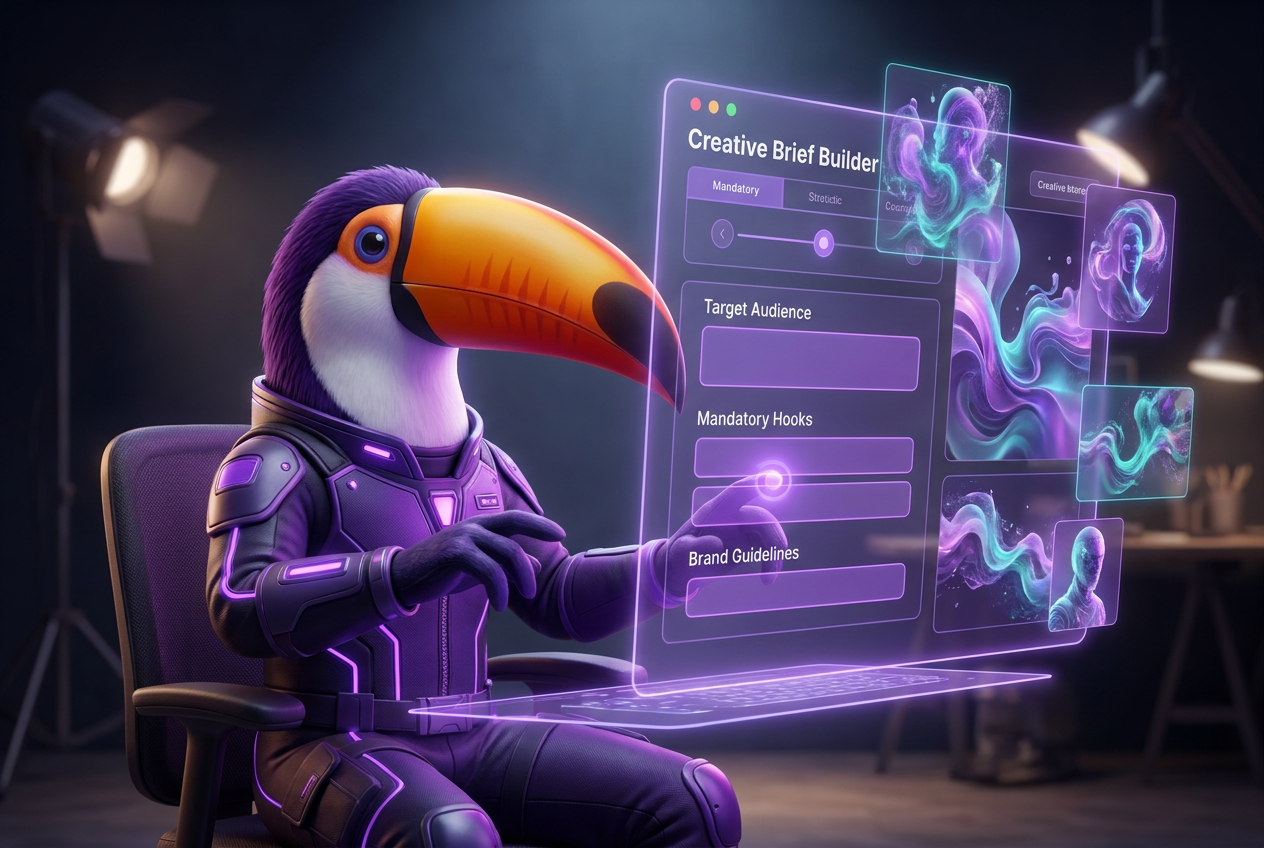
You draft a winning brief by clearly defining your target audience, mandatory hooks, brand guidelines, and payout structures in a centralized, interactive document. The goal is to give creators the exact parameters of your brand identity while allowing them the creative freedom to leverage AI video generators effectively.
A great brief is the foundation of scalable AI UGC generation. If your brief is too rigid, you end up with robotic, identical AI-generated videos. If it's too loose, you get off-brand content that you can't run as ads.
Start by outlining the specific problem your product solves. Provide a list of 3-5 approved visual hooks and audio hooks. Crucially, include your brand kit—hex codes, logos, and approved typography. In Anthum, this process is seamless; the Campaign Management module allows you to attach your brand kit directly to the brief, ensuring every creator in the marketplace starts with the right assets. Need inspiration for the text? Check out these 7 Video Ad Script Templates: Boost AI UGC ROI with Proven Hooks.
2. How Should You Source and Manage AI Video Creators?
Key Objective: Tap into specialized talent rather than generalist influencers. Owner: Creative Strategist
Sourcing creators requires tapping into a dedicated marketplace of AI video specialists, crucial for effective AI UGC generation, rather than relying on generalist influencer platforms. You need creators who understand how to write prompts, generate lifelike avatars, and edit for short-form retention, not just people with a smartphone ring light.
Managing dozens of creators via email is a logistical nightmare. When building your workflow, you must transition to a platform that centralizes communication and asset delivery.
By utilizing Anthum’s Creator Marketplace, brands instantly connect with a curated pool of talent specifically skilled in AI video tools. You no longer have to vet portfolios one by one; you simply launch your brief to the marketplace and let the specialized creators come to you. This drastically reduces the time-to-market for new ad creatives.
3. Why Are Video Contests the Best Way to Scale AI UGC Generation?
Key Objective: Maximize creative diversity and output volume. Owner: Campaign Manager
Video contests scale generation by incentivizing dozens of creators to interpret your brief simultaneously, yielding a massive variety of assets in a fraction of the time. Instead of paying one creator for one video, you offer a prize pool and receive dozens of unique variations, paying only for the winning submissions.
This is the core differentiator of the Anthum platform. Traditional 1-to-1 freelance models bottleneck your creative testing. In a contest model, you might receive 50 submissions for a single brief. One creator might use a hyper-realistic AI avatar in a kitchen setting, while another might use an energetic AI voiceover over dynamic product B-roll.
This volume is critical for modern media buying. As growth marketing expert Sarah Chen notes, "In the AI era, creative is the new targeting. If your workflow doesn't allow you to test 50 variations of a hook in a week, you are already losing to competitors who can." To see this in action, read how one brand achieved a DTC Success: Scale UGC Video, 40% CAC Cut with AI Contests.
4. How Do You Structure the Judging Pipeline?
Key Objective: Efficiently filter high volumes of video submissions. Owner: Marketing Team (Collaborative)
You structure a judging pipeline by establishing a multi-stage review process where marketing teams vote on submissions based on hook strength, brand alignment, and visual fidelity. A structured pipeline prevents the team from being overwhelmed by the sheer volume of assets generated by a contest.
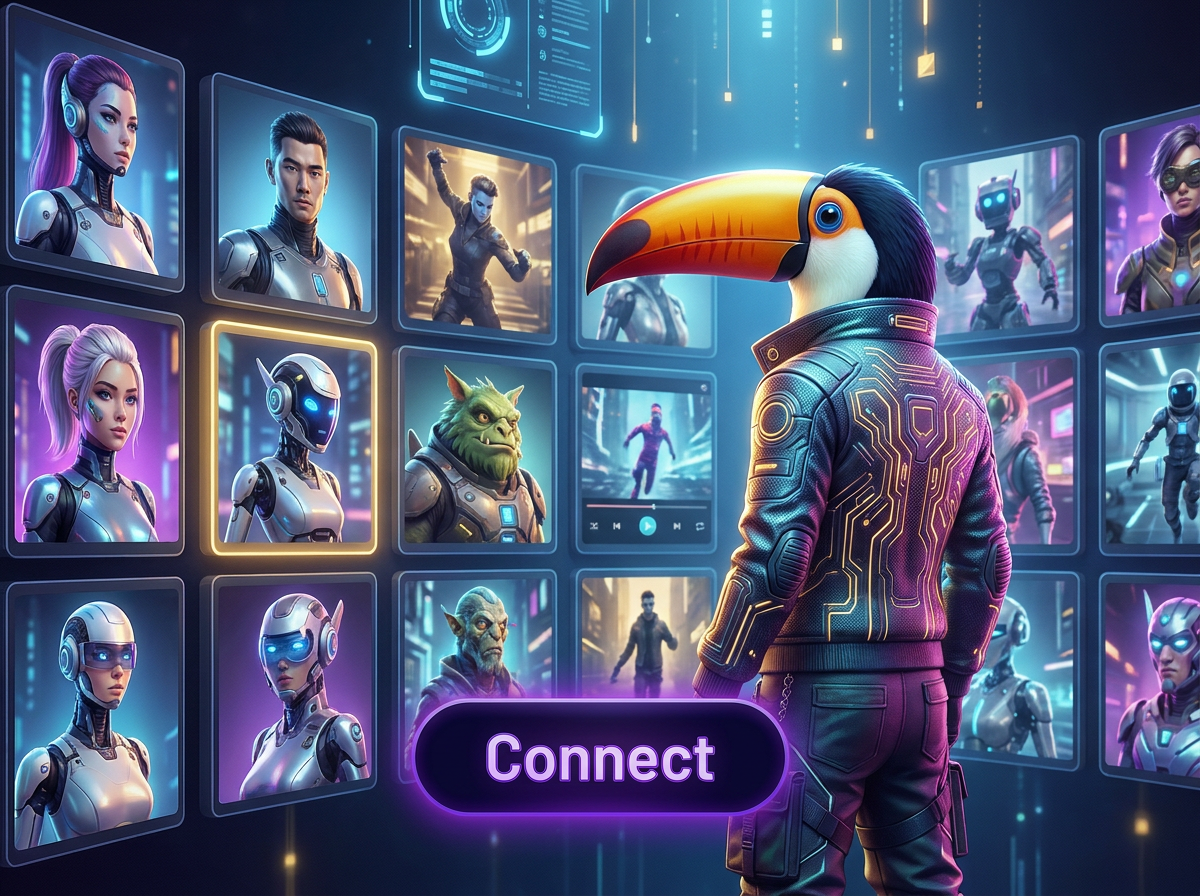
When you receive 50 to 100 AI UGC videos from your AI UGC generation campaigns, reviewing them in a Slack channel is impossible. An effective workflow requires a dedicated interface where videos can be watched, rated, and categorized.
Anthum’s Creative Workflow OS features a built-in judging pipeline. Team members can leave time-stamped comments, rate videos on a 5-star scale, and move assets through a Kanban-style board from "Submitted" to "Shortlisted" to "Winner." This ensures that only the highest-converting creatives make it to your ad accounts, maintaining quality control at scale.
5. Best Practices for Usage Rights & Licensing in AI UGC Generation
Key Objective: Secure full commercial rights without legal friction. Owner: Operations / Legal
The best way to handle usage rights is through automated, built-in licensing agreements that transfer full commercial rights upon the selection of a winning video. Manually sending PDFs and negotiating usage terms for every single piece of micro-content is a massive waste of resources.
When dealing with AI-generated content, rights management can feel murky if you are using fragmented tools. You need absolute certainty that you can use the winning assets in perpetual paid media campaigns across Meta, TikTok, and YouTube.
Anthum eliminates this headache entirely. The platform's Terms of Service ensure that the moment a brand selects a winner and funds are released, the full commercial rights are automatically transferred to the brand. No back-and-forth emails, no surprise copyright strikes—just pure, ready-to-deploy ad creative.
6. How Can You Automate Creator Payouts Securely?
Key Objective: Ensure fast, reliable compensation to build creator loyalty. Owner: Finance
You automate creator payouts by using an escrow-based platform that instantly releases funds to creators the moment their submission is approved by the brand. This removes the need for your finance team to process dozens of individual micro-invoices at the end of every month.

Creators thrive on momentum and reliable cash flow. If they have to chase you for a $200 payment for 45 days, they will not participate in your next contest.
Anthum’s Creator Payouts system handles all the financial routing. Brands fund the contest prize pool upfront into a secure escrow. Once the judging pipeline concludes and winners are selected, Anthum automatically distributes the payouts to the creators' wallets. This frictionless financial layer is what makes the ecosystem sustainable for both brands and AI video creators.
7. How Do You Analyze and Iterate on Winning Creatives?
Key Objective: Feed performance data back into the brief engine. Owner: Media Buyer / Data Analyst
You analyze and iterate on winning creatives by feeding ad platform performance data back into your brief engine, identifying exactly which hooks, scripts, and AI avatars drive the highest Return on Ad Spend (ROAS). Generation is only half the battle; iteration is where the real money is made.
Wyzowl's 2024 Video Marketing Report states that 89% of consumers have been convinced to buy a product after watching a video. But which video? Once your AI UGC generation workflow is live, you must track the metrics. If a specific AI avatar style or a "3 Reasons Why" script format is outperforming the rest, your next Anthum contest brief should explicitly ask for variations of that winning concept.
For a deeper look at how different platforms handle this data-to-creative loop, check out our guide on Anthum vs. Creatify vs. Billo: The Ultimate Showdown for Dominating AI UGC Platforms.
---
Scale Your AI UGC Generation Today
Building a scalable AI UGC generation workflow doesn't have to mean duct-taping ten different software subscriptions together. By centralizing your briefs, creator sourcing, contest management, judging, and payouts into one unified operating system, your team can focus on what actually matters: strategy and growth.
Anthum is the only platform purpose-built to combine the massive output of AI video contests with a seamless end-to-end campaign OS. Stop settling for slow, expensive, and fragmented creative processes. It's time to unleash the full power of AI and creator synergy.
Ready to transform your ad creative pipeline and slash your acquisition costs? Book a call with our team today and see how Anthum can supercharge your brand's growth.