By Marcus Vance · Published
Scaling video ads requires producing 10x more creative assets to combat ad fatigue and maintain ROAS.
* What are the options? Brands typically choose between in-house production teams, influencer platforms like Agentio, and AI video contest platforms like Anthum. * How does Anthum work? Anthum enables brands to source hundreds of AI-generated video ads at a fixed cost, paying only for the winning conversion-ready assets. * Which model is best? While in-house teams suit enterprise brands and Agentio suits YouTube sponsorships, Anthum provides the speed and volume required for direct-response performance channels.
Successfully scaling video ads is the ultimate stress test for any modern marketing team.
If your brand is trying to push past the $10k/day ad spend mark, you already know the harsh reality: the moment you increase your budget, your Customer Acquisition Cost (CAC) skyrockets. Why? Because your creative assets burn out. The "hero video" that carried you through Q1 is dead by Q2, and feeding the algorithm with fresh, high-converting video content has become an operational nightmare.
To solve this, growth-focused brands typically choose one of three paths: build an expensive in-house content machine, outsource to influencer platforms like Agentio, or leverage next-gen creator tools and AI video contests through Anthum. But which model actually protects your margins while delivering the volume you need?
Let’s dive into a bold, data-backed comparison of the true costs—both financial and operational—of scaling video ads in 2024.

Why Is Scaling Video Ads So Expensive Today for Growth Brands?
Scaling video ads is expensive today because media buying algorithms now rely almost entirely on creative diversity for targeting, forcing brands to produce an unprecedented volume of assets.
In the past, you could scale a single video ad by tweaking audience parameters. Today, "creative is the new targeting." According to a landmark study by Nielsen, creative quality drives 47% of total sales lift from advertising—making it the single most important factor in a campaign's success. Furthermore, Meta's own performance guidelines suggest that advertisers need to test 11 to 20 new creatives per ad set every single month just to combat ad fatigue.
This demand for volume creates a massive financial strain. As performance marketing expert Savannah Sanchez often notes, "The biggest bottleneck to scaling ad spend is a lack of high-quality, native-looking creative."
When you attempt scaling video ads using traditional methods, you aren't just paying for the final video. You are paying for the friction: the ideation time, the scripting, the talent sourcing, the shooting days, the editing revisions, and the inevitable dud videos that flop on day one.
How Do In-House Teams and Agencies Handle Scaling Video Ads?
In-house teams and traditional agencies handle scaling by increasing headcount and production days, which directly inflates fixed overhead costs and slows down time-to-market.
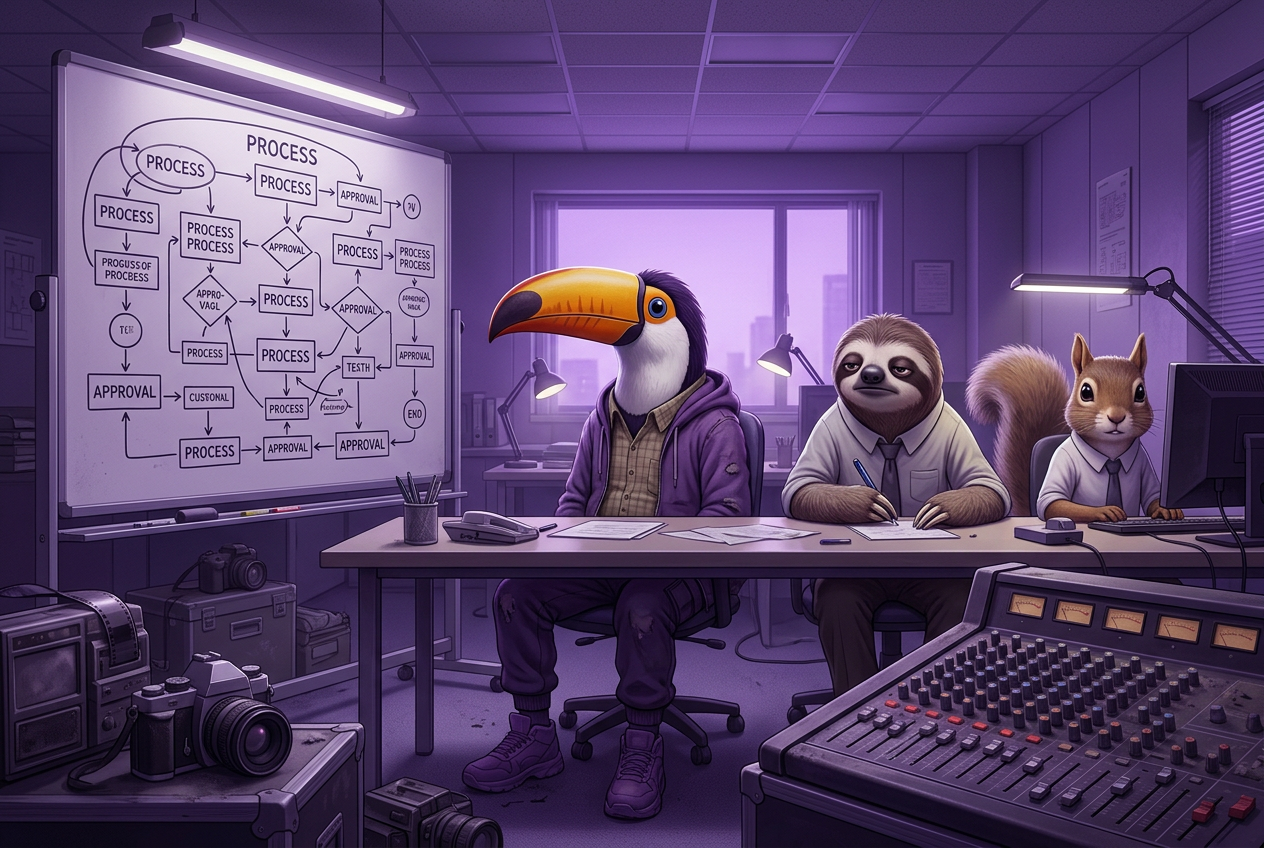
Building an internal content studio feels like the safest bet. You have total brand control, direct communication, and a dedicated team. But when it comes to rapid-fire UGC (User-Generated Content) or AI video ad production, the traditional model breaks down under its own weight.
The Hidden Costs of In-House Production
* High Fixed Overhead: A competent in-house team requires a creative strategist, a videographer, a video editor, and a media buyer. You are easily looking at $250,000+ in annual salaries before a single ad is produced. * The Echo Chamber Effect: An internal team of 3-4 people has a limited perspective. They will eventually run out of fresh angles, leading to repetitive hooks that fail to capture new audience segments. * Slow Iteration Cycles: Traditional production involves scripting, approving, shooting, and editing. If an ad fatigues on Tuesday, your in-house team might not have a replacement ready until next Friday.In-House Model: Pros and Cons
| Pros | Cons | | :--- | :--- | | Ultimate brand control and safety | Extremely high fixed overhead costs | | Deep understanding of the product | Slow turnaround times (weeks, not days) | | Predictable output style | "Echo chamber" ideation limits creative diversity |
Best For: Legacy brands with massive budgets ($1M+/mo) that prioritize cinematic brand-awareness campaigns over rapid direct-response testing.
What Are the True Costs of Using Agentio for Influencer Ads?
Using a platform like Agentio for influencer ads involves significant variable costs, including creator negotiation fees, unpredictable asset quality, and the friction of managing individual personalities.
Agentio has built a strong reputation by streamlining YouTube integrations and influencer sponsorships. They operate on a model that connects brands directly with creators who have established audiences. This is a powerful tool if your goal is influencer whitelisting or long-form sponsorships.
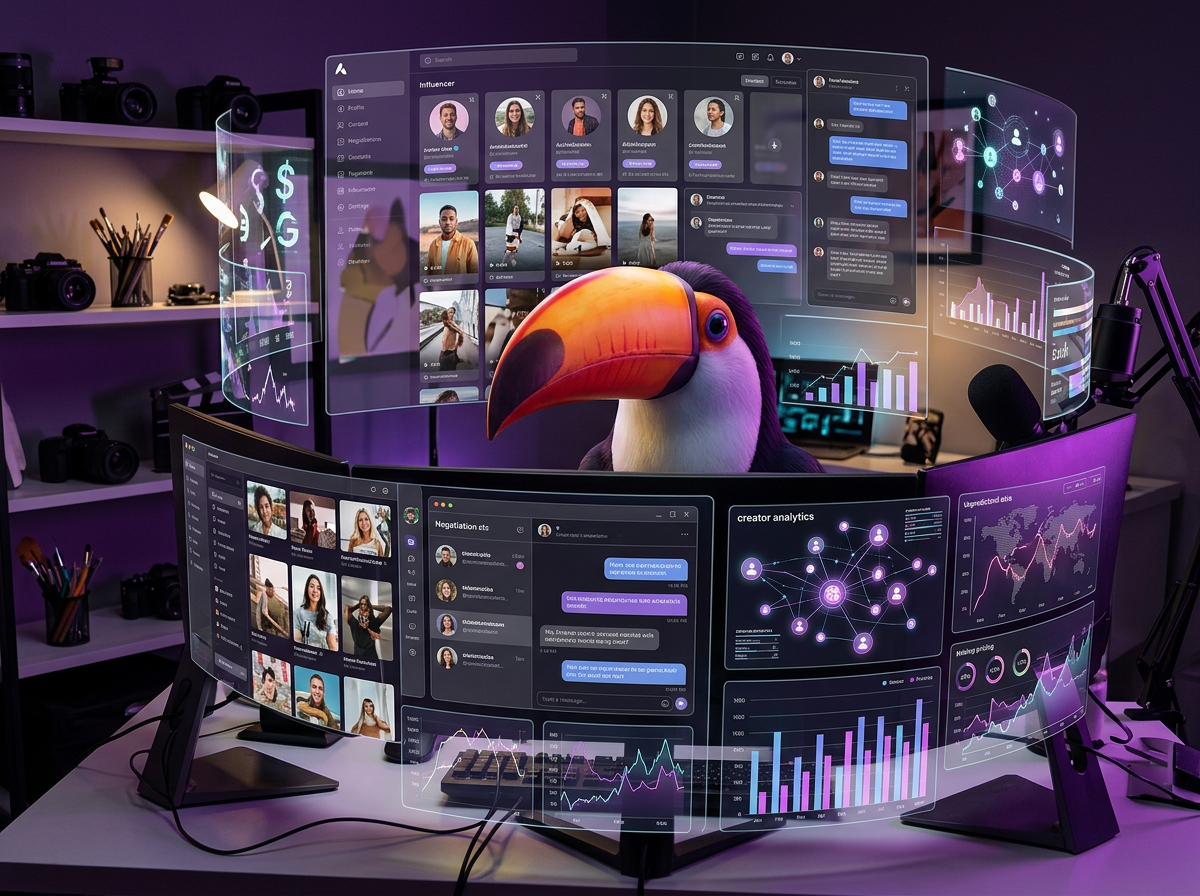
However, when your goal is rapidly scaling video ads for performance channels like Meta or TikTok, the influencer-first model introduces heavy friction and unpredictable video ad production costs. You are no longer just buying an ad; you are buying an influencer's time, audience, and ego.
The Friction of Influencer Platforms
* Unpredictable Pricing: Influencers charge based on their follower count, not their ability to create a converting direct-response ad. You might pay $2,000 for a video from a macro-influencer that yields zero conversions. * Management Overhead: Even with software smoothing the process, you are still dealing with individual creators. This means missed deadlines, off-brief submissions, and painful revision cycles. * Scalability Limits: If you need 50 new video ads this month, negotiating with 50 different influencers is a logistical nightmare. You end up relying on expensive ad creative software just to track the chaos.Agentio Model: Pros and Cons
| Pros | Cons | | :--- | :--- | | Access to established creator audiences | High variable costs and unpredictable pricing | | Great for long-form YouTube sponsorships | Heavy logistical friction and negotiation time | | Built-in trust from the influencer's followers | Difficult to scale to 50+ unique ads per month |
Best For: Brands looking for targeted YouTube sponsorships or macro-influencer endorsement campaigns where audience overlap is the primary goal.
How Do AI Video Contests Solve the Scaling Dilemma?
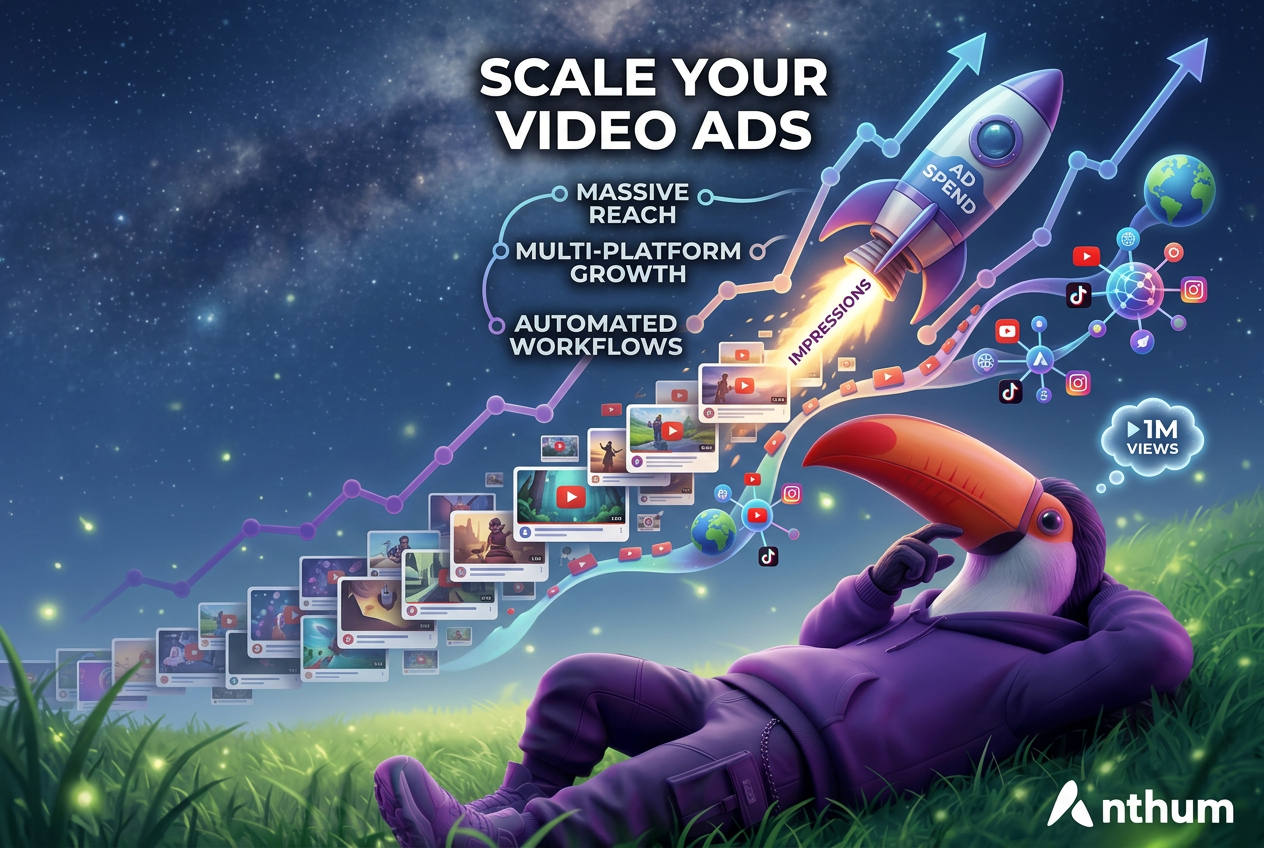
AI video contests solve the scaling dilemma by shifting the model from "pay-per-creator" to "pay-for-performance," allowing brands to source massive volumes of AI-generated video at a predictable, fixed cost.
This is where Anthum fundamentally changes the paradigm. Instead of hiring a team or negotiating with individual influencers, Anthum operates as an end-to-end creative OS built around AI video contests.
Here’s how it works: A brand launches a brief on the Anthum platform. Instantly, a decentralized network of expert AI video creators gets to work. They use advanced AI tools to generate scripts, avatars, voiceovers, and dynamic edits. Within days, the brand receives dozens—sometimes hundreds—of high-quality video submissions.
The Anthum Advantage
* Massive Creative Diversity: Because dozens of independent creators are competing, you receive a massive variety of angles, hooks, and visual styles. You break out of the in-house echo chamber immediately. * Predictable, Fixed Costs: You set the prize pool. Whether you get 20 submissions or 200, your budget remains exactly the same. You only license the winning assets that perfectly fit your performance criteria. * Speed to Market: AI creators move incredibly fast. You can launch a brief on Monday and have a fresh batch of scalable UGC-style AI videos ready to launch by Friday. * Zero Management Friction: Anthum handles the creator payouts, the licensing rights, and the campaign management pipeline. You just review, judge, and launch.Anthum AI Contest Model: Pros and Cons
| Pros | Cons | | :--- | :--- | | Fixed, predictable budget with massive ROI upside | Requires a clear, well-written creative brief upfront | | Unlimited creative diversity from a global talent pool | Not suited for traditional, highly-scripted TV commercials | | Zero negotiation or creator management friction | |
Best For: Growth-focused DTC, SaaS, and app brands that need to rapidly scale UGC video and AI ads to feed hungry algorithms without inflating their CAC.
Anthum vs Agentio vs In-House: Which Should You Choose?
Choosing the right model for scaling video ads depends entirely on your unit economics and your primary marketing objective.
If you are a Fortune 500 brand launching a Super Bowl campaign, keep it In-House or use a traditional agency. You need absolute control and have the budget to absorb the inefficiency.
If you are a B2B software company looking to sponsor specific YouTube channels to borrow their audience credibility, Agentio is a fantastic platform to streamline those sponsorships.ips.
But if you are a modern performance marketer, media buyer, or growth brand whose lifeblood is direct-response advertising on Meta, TikTok, and YouTube Shorts, Anthum is the clear winner.
The Final Verdict
Scaling video ads shouldn't mean bleeding your margins dry. The traditional models force you to choose between high fixed costs (in-house) and high friction (influencer outreach). Anthum’s AI video contest model eliminates both. By tapping into a competitive marketplace of AI video creators, you get the volume, the diversity, and the speed required to dominate modern ad auctions—all at a fixed price that protects your ROAS.Stop paying for the friction of content creation. Start paying for winning creative.
Ready to see how top brands are cutting their creative costs while 10x-ing their output? Discover the future of scalable ad creative with Anthum. Book a call with our team today, or get started by launching your first AI video contest.